Liaoning Xiangyi Steel Co., Ltd.


How to Choose the Right Cold Room Panel Thickness: A Complete Guide
Choosing the right cold room panel thickness is essential for maintaining stable temperatures, improving energy efficiency, and reducing operating costs. PU cold room panels are widely used in food processing, refrigerated warehouses, commercial freezers, and cold chain logistics.
This guide explains how to select the appropriate panel thickness based on temperature requirements, insulation performance, and project applications.
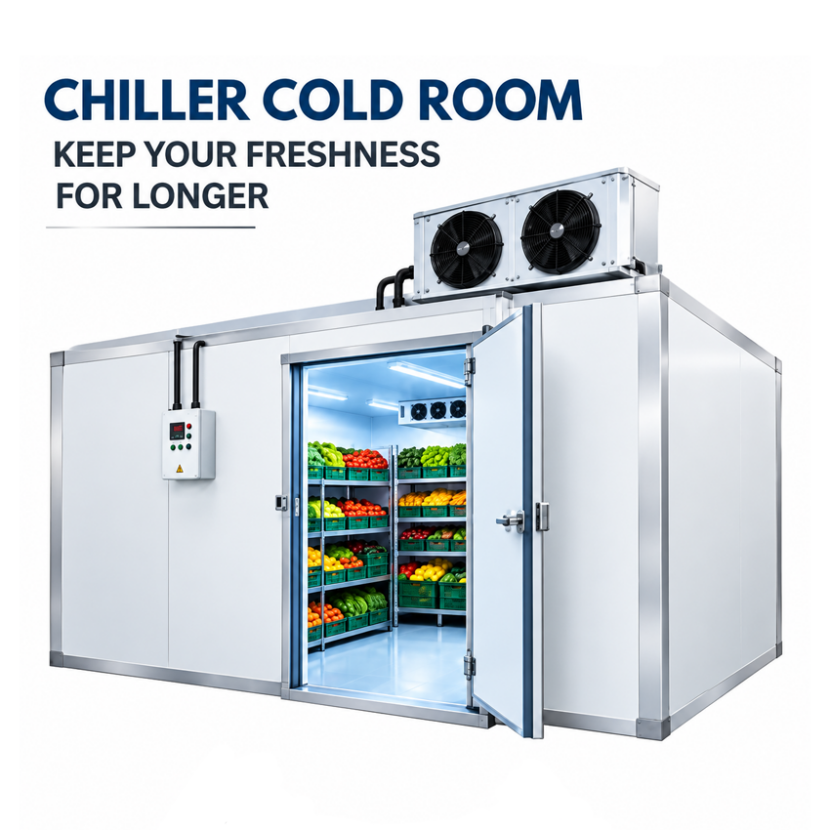
1. Why Does Panel Thickness Matter?
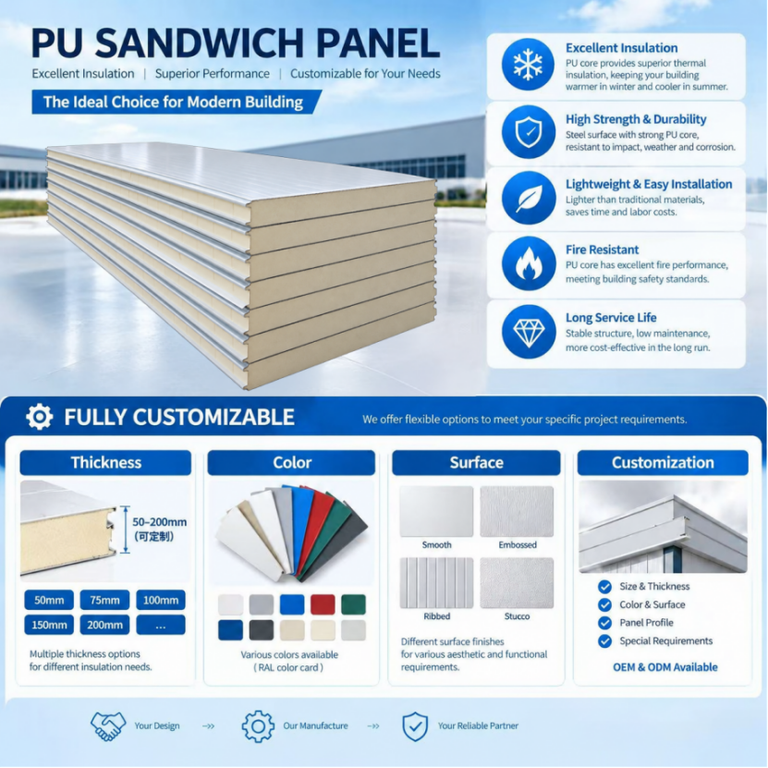
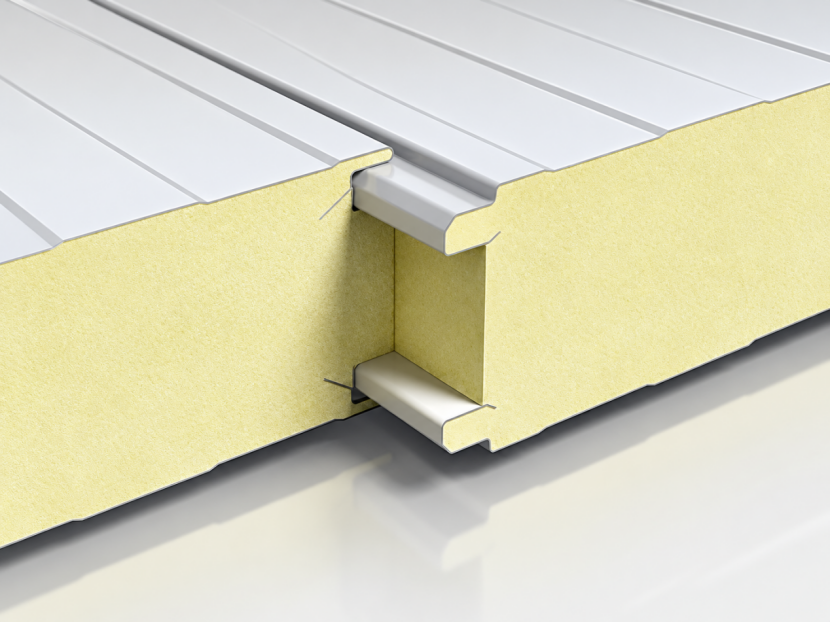
PU cold room panels consist of a rigid polyurethane insulation core bonded between two protective metal sheets. Their insulated structure reduces heat transfer and helps maintain consistent storage temperatures.
Thicker panels generally provide greater thermal resistance, helping reduce refrigeration loads and improve energy efficiency. Selecting the right thickness ensures a balance between initial investment and long-term operating costs.
2. Common Thicknesses and Applications
Different cold storage environments require different insulation levels. The following table provides a general selection reference.
| Panel Thickness | Typical Applications |
| 50mm | Temperature-controlled rooms and insulated partitions |
| 75mm | Fresh food storage and commercial chillers |
| 100mm | Refrigerated warehouses and general cold storage |
| 120–125mm | Low-temperature storage and commercial freezers |
| 150mm | Frozen food warehouses and freezer rooms |
| 200mm | Deep-freezing facilities and demanding insulation applications |
Note: Recommended thicknesses are indicative. Final selection depends on operating temperature, ambient conditions, and project-specific insulation requirements.
3. Key Factors in Thickness Selection
Operating Temperature: Lower storage temperatures generally require greater insulation performance.
Ambient Conditions: Hot climates increase heat gain and may require thicker panels.
Storage Requirements: Fresh produce, dairy products, frozen meat, and seafood have different temperature and humidity needs.
Energy Efficiency: Suitable insulation reduces heat transfer and helps lower long-term refrigeration costs.
Installation & Sealing: Properly sealed joints and connections are essential for preventing thermal bridges and maintaining insulation performance.
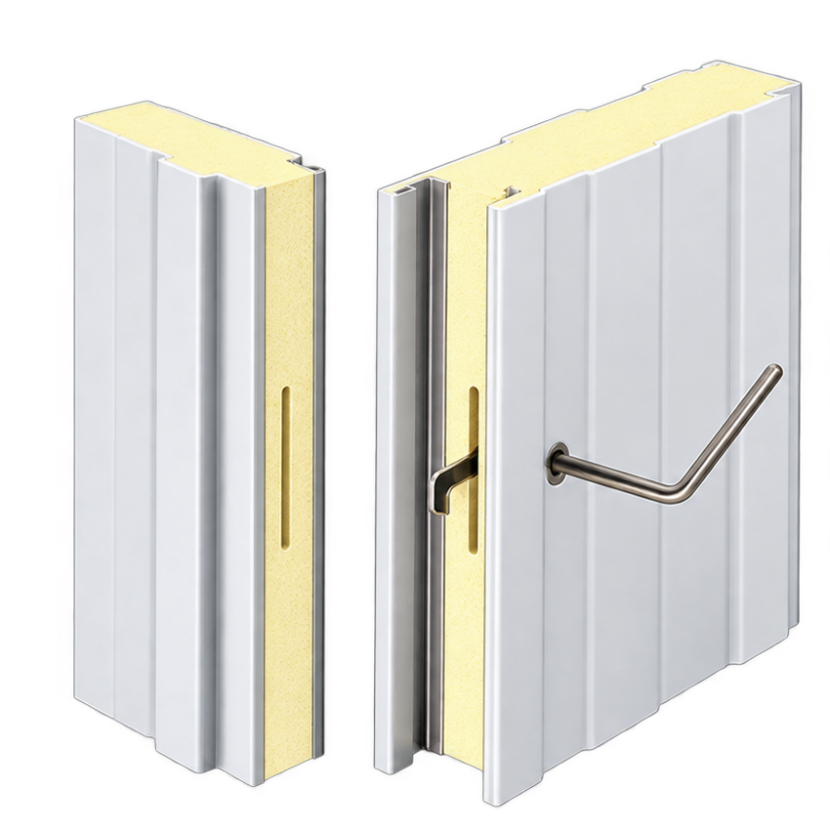
4. Cam-Lock vs. Continuous Cold Room Panels
Besides thickness, the panel connection system affects installation and overall cold room performance.
Cam-Lock Panels: Feature integrated locking mechanisms for convenient assembly, making them suitable for modular cold rooms.
Continuous Panels: Designed for larger wall and ceiling systems, commonly used in commercial and industrial cold storage facilities.
Both systems require proper joint sealing to maintain thermal insulation and vapor integrity.
5. How to Choose the Right Panel
Before selecting your cold room panels, consider the required storage temperature, local climate, stored products, insulation performance, and installation conditions.
Choosing the appropriate thickness and connection system helps ensure reliable performance and long-term energy efficiency.
Conclusion
Selecting the right cold room panel thickness is essential for efficient temperature control and reliable cold storage performance.
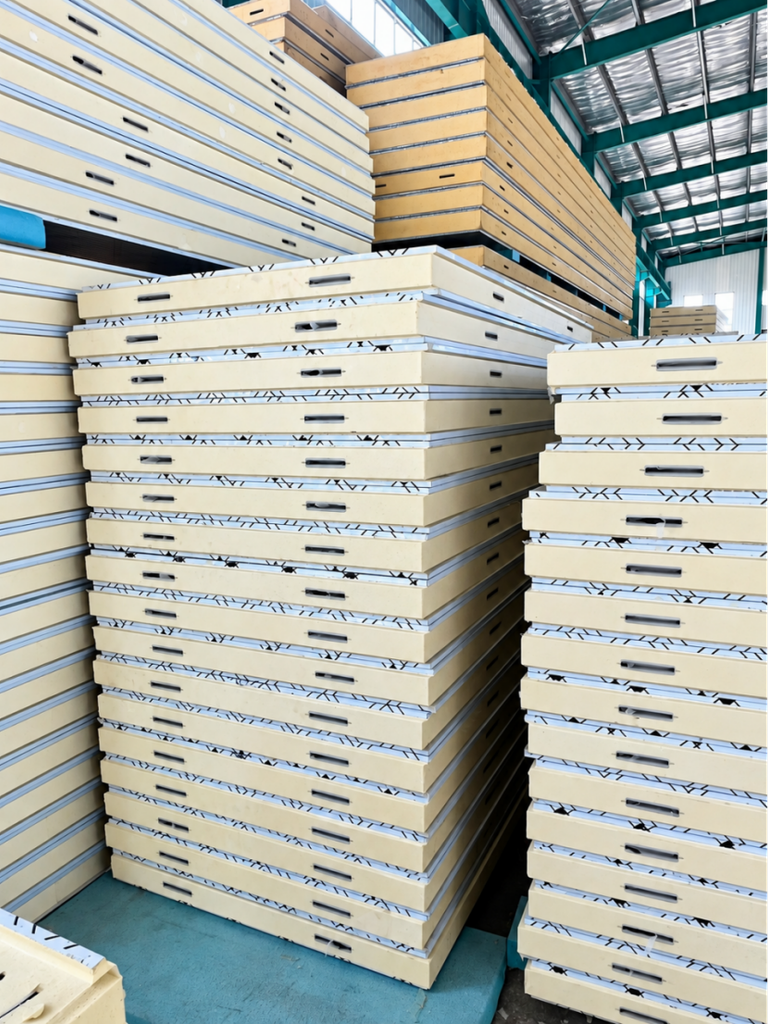
Liaoning Xiangyi Steel Co., Ltd. supplies PU cold room panels in 50mm, 75mm, 100mm, 120mm, 125mm, 150mm, and 200mm thicknesses, with Cam-lock and continuous panel options for different commercial and industrial applications.
Contact us for product specifications, technical support, and customized project quotations.